Cafe Trip Coffee Psilocybin: A New Way to Explore Microdosing
The Intersection of Specialty Coffee and Functional Mushrooms
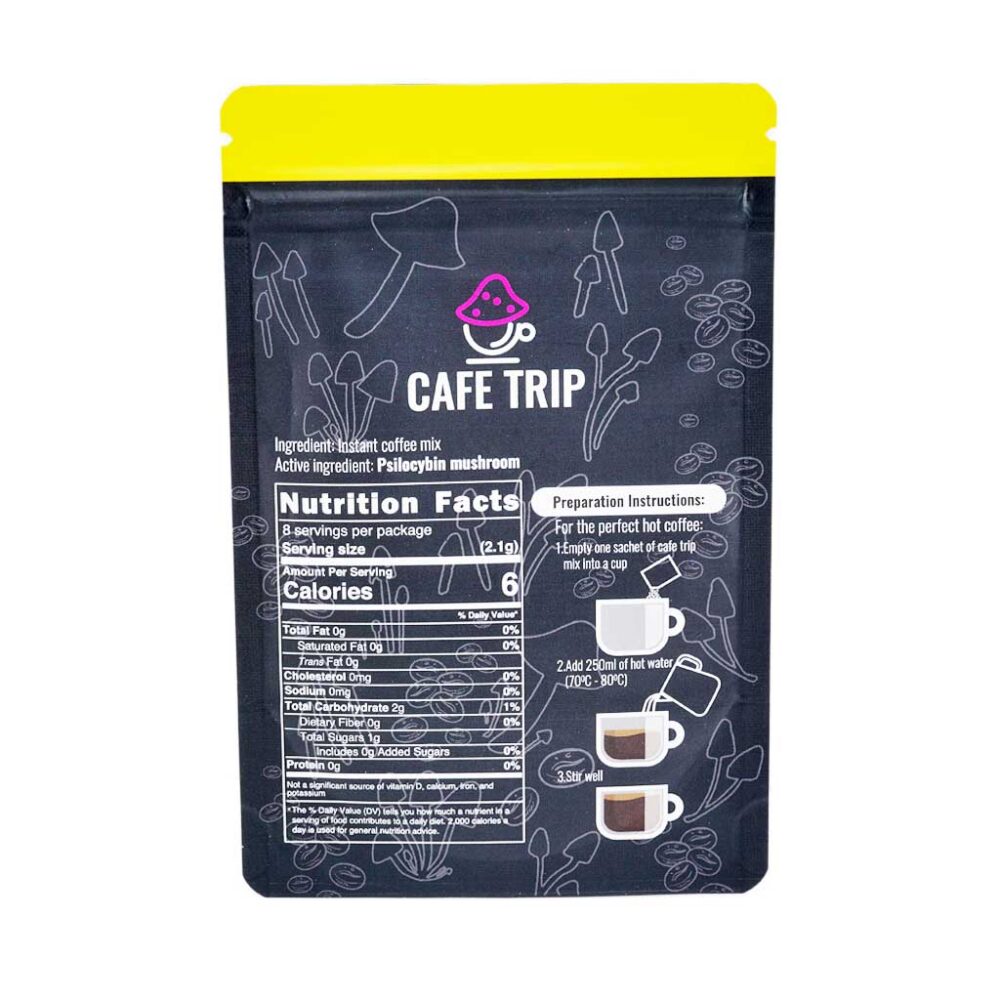
I first encountered the concept of Cafe Trip coffee psilocybin a few months ago, during a casual conversation with a friend who runs a small apothecary in Portland. She described it as a carefully prepared blend of specialty coffee and measured psilocybin, designed for people who want the ritual of a morning brew without the jitters of caffeine or the heaviness of a full psychedelic experience. I was skeptical at first. The idea of mixing a stimulant with a psychedelic seemed counterintuitive, but after trying it myself and speaking with several regular users, I began to understand its appeal. It is not about getting high. It is about finding a sustainable, functional edge that lasts through the workday.
What sets Cafe Trip coffee psilocybin apart from other microdosing products is its delivery method. Instead of capsules or chocolate bars, you get a drink that mirrors the familiar morning coffee routine. The psilocybin is extracted and infused into the coffee grounds, so the active compounds are evenly distributed throughout each cup. The effect is subtle: a mild lift in mood, sharper focus, and a sense of calm that caffeine alone never provided. One user I spoke with described it as "coffee without the edge." Another called it "a reset button for the brain." Both were careful to note that the experience depends heavily on dosage and personal tolerance.
How Global Trade Disruptions Are Shaping the Microdosing Market
It might seem strange to connect a niche product like Cafe Trip coffee psilocybin to global shipping routes, but the link is real and growing. The Red Sea Crisis, which began escalating in late 2023, has sent shockwaves through the entire supply chain for specialty ingredients. Companies like Maersk, one of the largest container shipping firms in the world, have been forced to reroute vessels away from the Suez Canal due to attacks by Houthi rebels. Instead of taking the direct path through the Red Sea and into the Mediterranean, container ships now travel around the Cape of Good Hope, adding thousands of miles and weeks of transit time to each voyage.
This shift has direct consequences for anyone importing coffee beans, cacao, or functional mushroom extracts from East Africa, Southeast Asia, or South America. The longer routes increase ocean freight costs, which in turn drive up the price of raw materials. Maritime insurance premiums have spiked for vessels passing through high-risk zones near the Indian Ocean, and those costs are eventually passed down to consumers. For a small brand trying to produce a consistent batch of Cafe Trip coffee psilocybin, these disruptions mean higher ingredient costs and longer lead times. Some producers have had to adjust their formulas or raise prices to stay afloat.
Just-in-Time Inventory Under Pressure
The just-in-time inventory model, which many food and beverage companies rely on, has proven fragile under these conditions. When a shipment of Arabica beans or psilocybin extract is delayed by three weeks due to rerouted shipping routes, production lines stall. Alternative routes like air freight exist, but they are prohibitively expensive for bulk ingredients. A single pallet of specialty coffee flown from Ethiopia to the United States can cost ten times what it would by sea. For a product like Cafe Trip coffee psilocybin, where profit margins are already tight due to the cost of extraction and quality control, absorbing those logistics costs is not sustainable.
I spoke with a procurement manager at a midsize functional beverage company who described the current situation as "a constant game of whack-a-mole." Every few weeks, a new bottleneck appears. One week it is a shortage of glass bottles because the factory in China cannot get raw materials. The next week it is a delay on organic coffee from Colombia because the port is backed up. The Red Sea Crisis has only amplified these existing vulnerabilities. The Suez Canal handles roughly 12 percent of global trade, and when that artery is disrupted, the ripple effects touch every corner of the supply chain.
Commodity Prices and the Cost of a Cup
Commodity prices for coffee have risen steadily over the past two years, driven by a combination of climate issues in major growing regions and the increased cost of ocean freight. Energy prices also play a role, since fuel accounts for a significant portion of shipping costs. When container ships burn more fuel to sail around the Cape of Good Hope, those costs are passed along. The same dynamic affects the production of psilocybin, which requires controlled environments and consistent energy inputs. If energy prices spike, so does the cost of growing and processing the mushrooms.
For European markets, the situation is particularly acute. Many coffee roasters and functional beverage brands in Europe rely on imports from East Africa and South America. The Red Sea Crisis has forced many of those shipments to reroute around the Cape of Good Hope, adding two to three weeks to delivery times. That delay not only increases costs but also affects freshness. Coffee beans are at their peak flavor within a few months of roasting, and a delay in transit can mean the difference between a bright, complex cup and a flat, stale one. Producers of Cafe Trip coffee psilocybin must balance these freshness concerns with the logistical realities of a disrupted global trade system.
Maritime Security and the Human Element
Beyond the economic costs, the Red Sea Crisis has a human dimension that is easy to overlook. Maritime security in the region has deteriorated to the point where crews on container ships face genuine danger. Houthi rebels have targeted vessels with missiles and drones, and several ships have been damaged or sunk. Sailors now spend weeks in high-stress conditions, navigating through waters where an attack could come at any moment. Insurance companies have responded by raising premiums for ships passing through the Red Sea, and some crews have refused to sail through the area altogether. This creates a bottleneck at ports, as ships wait for security clearances or reroute entirely.
These disruptions affect every industry that depends on global trade, including the niche market for functional mushrooms and specialty coffee. A container of psilocybin extract that was supposed to arrive in Rotterdam in January might not show up until March. The brand that ordered it either pauses production, finds a more expensive supplier, or reformulates its product. Each option carries trade-offs. Pausing production hurts cash flow. Switching suppliers can change the taste or potency of the final product. Reformulating takes time and testing. For a small brand trying to build a reputation for consistency, none of these choices are easy.
Adapting to a New Normal
Despite these challenges, the demand for products like Cafe Trip coffee psilocybin continues to grow. Consumers are looking for alternatives to traditional stimulants, and they are willing to pay a premium for something that feels intentional and well-made. The key for producers is to build resilience into their supply chains. That means diversifying suppliers, maintaining larger inventories, and being prepared to absorb occasional cost increases. It also means being transparent with customers about why prices fluctuate or why a particular batch tastes slightly different.
Some companies are exploring regional sourcing as a way to reduce reliance on long shipping routes. If you can grow functional mushrooms in a controlled indoor environment near your production facility, you eliminate the need for ocean freight altogether. Coffee is harder to regionalize, but there are roasters in North America and Europe who source from within their own continents. The trade-off is that regional coffee often costs more and has a different flavor profile than beans from traditional growing regions. For a product like Cafe Trip coffee psilocybin, where the balance of flavor and function is critical, those differences matter.
Looking Ahead
The Red Sea Crisis will not last forever, but the vulnerabilities it has exposed will not disappear overnight. Global trade is a complex system, and disruptions in one part of the world can cascade into industries that seem completely unrelated. The microdosing market, like every other sector that relies on imported ingredients, will need to adapt. That might mean higher prices in the short term, but it could also lead to more thoughtful sourcing and production practices in the long run.
For now, if you are curious about trying Cafe Trip coffee psilocybin, the best approach is to treat it as what it is: a tool for focus and well-being, not a shortcut or a party trick. Start with a low dose, pay attention to how your body responds, and understand that the quality of the experience depends on the quality of the ingredients. The supply chain that brings that cup to your table is more fragile than most people realize, but that fragility is also what makes each batch a small act of resilience.
Corrections
Spot something wrong? Send it to the desk and it gets fixed in the open.